


Believe, So That You May Live
John 20:30-31
I remember having a lunch with a pastor friend of mine. The question came, “What are you preaching?” I had just begun preaching through the gospel of John, so I told him so: “I just started the book of John.” He said, “Really?” Then he added, “I preached through the gospel of John a few years ago. What I found difficult about John is how repetitive it was, especially in the application. It was difficult to exhort people every week to the same application of belief.”
This was early on in my exposition of John, so this was helpful counsel. I thanked him for it, and we carried on with our lunch. But his thought has continued to be on my mind as I have preached through this book. And I think, looking back at the gospel of John, I have really embraced this.
Belief in Jesus is the purpose of the book:
John 20:30-31
Now Jesus did many other signs in the presence of the disciples, which are not written in this book; but these are written so that you may believe that Jesus is the Christ, the Son of God, and that by believing you may have life in his name.
During our expositions through the book of John, we have kept these verses at the forefront, repeating them, perhaps 50 times in my 70+ sermons through the book. It is from these words that I have derived the main point of the gospel of John, “Believe, so that you may live.”
As a pastor, if you remember nothing else from the book of John but these words, I’m satisfied with the two years that we spent in the gospel of John. These words are the most foundational words in the gospel of John. They express the entire purpose of why John has written. John has written these words so that we might believe, and that by believing, we may have life in his name.
This morning, we come to these crucial verses in our exposition. We come with 20 chapters of the book at our backs. We come having worked through every chapter, section by section, paragraph by paragraph, verse by verse. The exhortation still remains: believe that Jesus is the Christ, the Son of God, that you may have life in his name!
If there is anything that I want for you as a pastor, it is your life! I want you to know the joy of following Jesus in this life. I want you to experience the eternal joys of everlasting life, which comes through faith in Jesus. This is John 3:16.
John 3:16
For God so loved the world, that he gave his only Son, that whoever believes in him should not perish but have eternal life.
When we believe in Jesus, that he is the God-man, sent by his Father into the world, to be lifted high upon the cross, so that he might die for our sins, the result is that we will live forever with the Father and the Son, worshiping throughout all eternity.
Revelation 5:13
And I heard every creature in heaven and on earth and under the earth and in the sea, and all that is in them, saying, “To him who sits on the throne and to the Lamb be blessing and honor and glory and might forever and ever!”
This is where belief in Jesus takes us! It takes us to the very throne of God in heaven, where we give blessing and honor and glory and might to him who sits on the throne and to the Lamb, forever and ever!
So, this morning as we come to John 20:30-31, it is appropriate for us to go back to the beginning, to everything that John has written, and to press upon our hearts the importance of belief. I want to do so using the pictures from Tom Lach’s booklet, The Stories of the Gospel of John: Memorized in 35 Minutes.

These pictures are memorable and helpful for us to grasp the raw contents of the gospel of John. So I want to review them all and press you to believe in Jesus, as these chapters relentlessly do.
The image for chapter 1 contains the stars of creation, calling to mind the opening words, “In the beginning.” Below, you can make out the figure of John the Baptist baptizing, the one who pointed us to the Lamb of God.

We see the first part of the image in the very first words of the gospel of John:
John 1:1-4
In the beginning was the Word, and the Word was with God, and the Word was God. He was in the beginning with God. All things were made through him, and without him was not any thing made that was made. In him was life, and the life was the light of men.
In these words, we are introduced to Jesus, who is called “the Word,” who is identified as “God” (verse 1), and we are told that life was in him (verse 4). We are told in verse 12,
John 1:12
But to all who did receive him, who believed in his name, he gave the right to become children of God,
This is where true life comes from. It comes from God, and a child of God will live with God. We become children of God by receiving Jesus and by believing in his name. Chapter 1 is all about the beginnings of Jesus upon the earth. It begins with John the Baptist, who points to Jesus and says.
John 1:29
Behold, the Lamb of God, who takes away the sin of the world!
That’s how we have life in his name: by having our sin forgiven! We are forgiven our sins when we believe in Jesus.
So we come to chapter 2. The image below depicts a bride and groom kneeling at the altar, because chapter 2 tells the story of the wedding at Cana, when Jesus turns the water into wine.
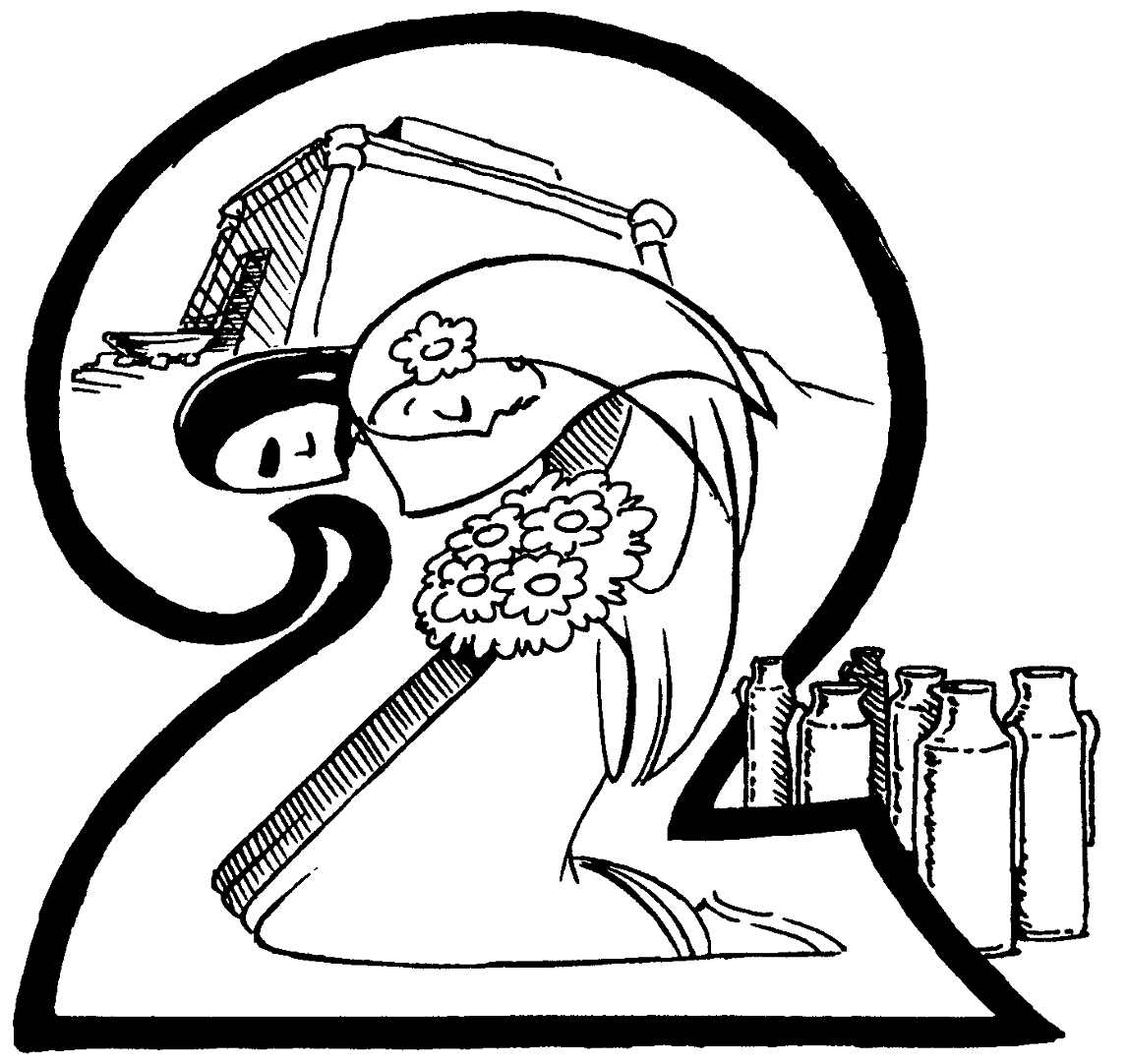
Do you remember the story? They ran out of wine. Jesus told the servants.
John 2:7-8
Fill the jars with water... Now draw some out and take it to the master of the feast.
Somewhere in that process, from the filling of the jars to the bringing of the water to the master of the feast, the water had become wine. We read in verse 11,
John 2:11
This, the first of his signs, Jesus did at Cana in Galilee, and manifested his glory. And his disciples believed in him.
Here John is winking at us. The disciples of Jesus, who saw the miracle of the water becoming wine, believed in Jesus. John calls us to believe as well.
Chapter 2 also records the cleansing of the temple. When Jesus came into the temple courts and drove out the money changers, the Jews demanded a sign. Jesus told them,
John 2:19
“Destroy this temple, and in three days I will raise it up.”
They thought he was speaking of the physical building, but he was speaking of his body. John tells us in verse 22,
John 2:22
When therefore he was raised from the dead, his disciples remembered that he had said this, and they believed the Scripture and the word that Jesus had spoken.
This is the constant pressure we received when we read the gospel of John: they believed. Will we believe as well?
After chapter 2 comes chapter 3. The picture here shows the beady eyes of a man, and his name is Nicodemus. He came to Jesus by night. This is “Nic at Night.”

Nicodemus came to Jesus because of the signs that Jesus was doing. He professed to Jesus,
John 3:2
"Rabbi, we know that you are a teacher come from God, for no one can do these signs that you do unless God is with him."
This is the point! Jesus was doing signs, miracles, which demonstrated his origin. He came from God. John is calling us to believe in Jesus, to believe that he was the Word from the beginning with God. Jesus spoke with Nicodemus about being born again.
John 3:3
Truly, truly, I say to you, unless one is born again he cannot see the kingdom of God.
Nicodemus, the ruler of the Jews, the teacher of Israel, didn’t understand, nor did he believe. He said,
John 3:9
“How can these things be?”
And Nicodemus left the presence of Jesus unbelieving.
In chapter 4, however, we see one who believes. This image looks like a well.

Who did Jesus meet at a well? The Samaritan woman, who had five husbands and was living with a man, and who came to the well alone because she was an outcast among the other women in the village. Jesus called her to believe him.
John 4:21-24
Jesus said to her, “Woman, believe me, the hour is coming when neither on this mountain nor in Jerusalem will you worship the Father. You worship what you do not know; we worship what we know, for salvation is from the Jews. But the hour is coming, and is now here, when the true worshipers will worship the Father in spirit and truth, for the Father is seeking such people to worship him. God is spirit, and those who worship him must worship in spirit and truth.”
She changed the subject in verse 25, saying,
John 4:25-26
“I know that Messiah is coming (he who is called Christ). When he comes, he will tell us all things.” Jesus said to her, “I who speak to you am he.”
Jesus said, “I am the Messiah!” And she believed! She went into the town and told the villagers of Jesus, and many of them came to see him, and many of them believed.
John 4:39
Many Samaritans from that town believed in him because of the woman’s testimony.
John is winking at us again. He is telling us of the faith of the Samaritans, because he is writing for our faith. He is calling us to believe in Jesus as well.
At the end of chapter 4, we see the sign of the official’s son who is healed (not indicated in the picture above). This official lived in Capernaum. His son was ill. But Jesus was in Cana, some 20 miles away. For us today, twenty miles is about twenty-five minutes by car. But for this man, it was a full day’s journey on foot over the hills, something like a ten-hour walk. This man traveled twenty miles just to see Jesus and ask him to come and heal his son.
John 4:50
Jesus said to him, “Go; your son will live.” The man believed the word that Jesus spoke to him and went on his way.
This official believed! And his son lived. When he calculated everything, he figured out that when Jesus said, “Your son will live,” it was 1 o’clock in the afternoon, exactly the same time that the fever left him in Cana. Did you notice the connection between belief and life? Jesus is a life-giver. When we believe in him, he gives us life.
Then comes chapter 5. This picture contains a man in a wheelchair. Of course, they didn’t have wheelchairs in those days, but they did have people who couldn’t walk. This is calling to mind the man Jesus heals in this chapter.

Chapter 5 tells us of a man who was paralyzed, who had been unable to walk for 38 years. He was lying by the pool of Bethesda, hoping to get in. According to the tradition of the day, when an angel stirred the waters of the pool, whoever got in first would be healed. This man had been waiting there for years, unable to get himself in.
John 5:8-9
Jesus said to him, “Get up, take up your bed, and walk.” And at once the man was healed, and he took up his bed and walked.
This is another sign that John tells us about, calling us to believe in him. As the narrative goes on, you see the hardness of those who would not believe: “He came to his own, and his own people did not receive him” (John 1:11). It was the Jews who didn’t believe in Jesus. They didn’t deny the miracle. Rather, they were enraged that the man who was lame would dare to carry his sleeping pad on the Sabbath day.
John 5:15-16
The man went away and told the Jews that it was Jesus who had healed him. And this was why the Jews were persecuting Jesus, because he was doing these things on the Sabbath.
In this story, you see John setting up the conflict that Jesus had with the Jews, which would eventually culminate in his death on the cross. They didn’t deny that Jesus was doing these signs, only that he was doing them on the Sabbath. How blind you must be to come to this conclusion! How spiritually blind you must be if you don’t believe what John tells us about Jesus. He is the Christ! He is the Son of God! Believe in him!
We come to chapter 6. This image contains a letter “b,” which stands for “bread.”

In chapter 6, Jesus feeds the 5,000 from five loaves of bread and two fish, which he multiplied as the disciples distributed the food to the people. This shows the power of Jesus! It is followed up in verses 16-20 by Jesus walking on the water. The people saw the power of Jesus and were searching for him the next day, walking clear around the Sea of Galilee to find him in Capernaum. Jesus confronted them about their motives.
John 6:26-27
Truly, truly, I say to you, you are seeking me, not because you saw signs, but because you ate your fill of the loaves. Do not work for the food that perishes, but for the food that endures to eternal life, which the Son of Man will give to you. For on him God the Father has set his seal.
The people saw the miracles that Jesus was doing and wanted more of him, so they could have more of the bread! But Jesus points them to the eternal food that he can give, which endures to eternal life.
John 6:28-29
Then they said to him, “What must we do, to be doing the works of God?” Jesus answered them, “This is the work of God, that you believe in him whom he has sent.”
Jesus calls us to believe in him! John’s gospel is calling us to believe in Jesus, so that we might have the life-giving bread that he gives! Jesus says in verse 35,
John 6:35
“I am the bread of life; whoever comes to me shall not hunger, and whoever believes in me shall never thirst."
Do you want the bread of life that will cause you never to hunger again? Then believe in Jesus and follow after him. Are you believing in Jesus?
We come to chapter 7. This image shows a question mark, because chapter 7 is all about the confusion about Jesus at the feast: “Who is he?” “Is he the Christ?”

Some said that he was a good man (John 7:12). Others said that Jesus was leading the people astray (John 7:12). Jesus cried out the invitation at the feast.
John 7:37-38
On the last day of the feast, the great day, Jesus stood up and cried out, “If anyone thirsts, let him come to me and drink. Whoever believes in me, as the Scripture has said, ‘Out of his heart will flow rivers of living water.’”
This is the promise of life for those who believe! Jesus promises living water to all who believe in him! Are you thirsty? Are you drinking of Jesus? John writes his gospel that we might believe in Jesus and drink of this water!
Then comes chapter 8. This picture shows two men arguing, depicting the conflict between Jesus and the Pharisees that fills this chapter.

In this chapter, Jesus says.
John 8:12
I am the light of the world. Whoever follows me will not walk in darkness, but will have the light of life.
He is light, which we can follow, and we will receive life! But the Jews didn’t believe in Jesus. They argued with him, and argued with him, and argued with him, never coming to believe in him. Oh, may this not be true of us. May we believe in Jesus!
The image also contains a subtle allusion to a woman looking down in shame. This is the woman caught in adultery, whom these argumentative Jews wanted to stone. But Jesus said.
John 8:7, 10-11
Let him who is without sin among you be the first to throw a stone at her. ... Women, where are they? Has no one condemned you? ... She said, “No one, Lord.” And Jesus said, “Neither do I condemn you; go, and from now on sin no more.”
This is the grace of Jesus on display for all who believe in him! Those who resist him will argue all the day long. Those who believe will receive grace. We often see the religious elite failing to believe, while the outcasts of society will believe in Jesus. When this happened, Jesus prayed,
John 11:25-26
“I thank you, Father, Lord of heaven and earth, that you have hidden these things from the wise and understanding and revealed them to little children; 26 yes, Father, for such was your gracious will."
We need to come to Jesus as little children, simply believing and trusting in him, not like those in chapter 8 who argued and argued, showing only their blindness.
Chapter 9. This picture shows a cane. This reminds us of the canes that a blind man might use to navigate this world without sight.

Indeed, that’s what we see in chapter 9: a blind man who encounters Jesus.
John 9:6-7
[Jesus] spit on the ground and made mud with the saliva. Then he anointed the man’s eyes with the mud and said to him, “Go, wash in the pool of Siloam.” So he went and washed and came back seeing.
This blind man was given sight, and his whole world was changed! He told the Pharisees what Jesus had done:
John 9:16
“He put mud on my eyes, and I washed, and I see”
The Jews called Jesus a sinner because he healed this man on the Sabbath. The man told them"
John 9:25
"Whether he is a sinner I do not know. One thing I do know, that though I was blind, now I see."
With that, the Jews cast him out of the synagogue. Eventually Jesus found the man and said,
John 9:35-38
“Do you believe in the Son of Man?” He answered, “And who is he, sir, that I may believe in him?” Jesus said to him, “You have seen him, and it is he who is speaking to you.” He said, “Lord, I believe,” and he worshiped him.
Consider the remarkable faith here. This man was blind from birth. When Jesus came and anointed his eyes with mud, the man never even saw him. He simply obeyed by going out and washing. He came back seeing. But he had never laid eyes on Jesus. So, when Jesus said, "It is he who is speaking to you.” The man responded, "I believe."
John tells us this story that we too might see Jesus and believe in him! As we believe that Jesus is the Christ, the Son of God, we will have life in his name.
This life is illustrated in chapter 10. The picture here shows the gate to a sheep fold.

In chapter 10, Jesus uses the sheep and the shepherd analogy to teach us about the abundant life.
John 10:9-10
I am the door. If anyone enters by me, he will be saved and will go in and out and find pasture. The thief comes only to steal and kill and destroy. I came that they may have life and have it abundantly.
Life, abundant life, comes through Jesus. You enter into life through Jesus! As a sheep, you go through Jesus to find the pasture. As a person, you believe in Jesus to find abundant life in him! How does our life come? It comes through the death of Jesus.
John 10:11
I am the good shepherd. The good shepherd lays down his life for the sheep.
This is the good news. Jesus has died in our place, as our substitute. He died, that we might live! We live by faith in Jesus.
The life that Jesus gives is illustrated in chapter 11. The image shows two figures standing together: Jesus and Lazarus.

John 11 tells the story of Jesus raising Lazarus from the dead. Lazarus and his sisters were close friends with Jesus. Lazarus had died and was in the tomb for four days. Jesus came to the tomb in the presence of many witnesses.
John 11:43
[Jesus] cried out with a loud voice, “Lazarus, come out.”
The corpse of Lazarus obeyed the voice of Jesus. He rose from the dead and came out of the tomb alive! The teaching point Jesus gives is in verse 25.
John 11:25
I am the resurrection and the life. Whoever believes in me, though he die, yet shall he live.
Again, we see the connection between belief and life. If you believe in Jesus, you will live! Even if you die, you will live. Jesus clearly has the power to give life. If Jesus can raise the dead, he can give you life after death as well.
The religious leaders of the day confirmed the reality of the miracle in that they made plans to put Lazarus to death, because on account of him many of the Jews were going away and believing in Jesus (John 12:10). You don’t try to put a dead man to death. It is only those who are alive who can be put to death.
On to chapter 12. This picture contains two details. The first shows Jesus standing while Mary anoints his feet for burial.

The second detail in the picture is a palm tree, signifying the triumphal entry, when Jesus came into Jerusalem on a donkey and people took branches of palm trees and laid them down in his path. Do you remember what they cried out?
John 12:13
Hosanna! Blessed is he who comes in the name of the Lord, even the King of Israel!
What does “Hosanna” mean? It means “Save us!” It’s a cry of deliverance! The Jews were acknowledging Jesus as the one who could deliver them, only his plan of deliverance was different than what they thought. They thought that Jesus would deliver them from the political tyranny of the Romans. But Jesus would deliver us from our sins by dying in our place upon the cross.
Riding into Jerusalem on a donkey shows the humility of Jesus. He didn’t come as a king to be served. He came as a servant. We see this in chapter 13.

This picture shows Jesus before the Last Supper, carrying a basin to wash the feet of the undeserving disciples. The other prominent figure in the image is Judas, who is about to betray him. All the while, Judas, whom Satan had entered, was preparing to betray him. At the Supper, Jesus addressed what would happen, how the Scripture would be fulfilled.
John 13:18-19
He who ate my bread has lifted his heel against me. ... I am telling you this now, before it takes place, that when it does take place you may believe that I am he.
The gospel of John is relentless in pushing us to faith in Jesus. Jesus knew that Judas would betray him. Jesus knew that he would die upon the cross. John wants us all to know that this was in accordance with God’s plan, that we might believe in Jesus.
Then, in our pictures, we come to chapters 14-17.
These chapters contain the extended instruction that Jesus gives to his disciples in the upper room. There is not a lot of outward action, but in that upper room, Jesus continued to press the themes of belief in him and the life that comes through him. The image for these chapters contains several details. In the number representing chapter 15 you can see a vine, pointing to Jesus’s words, “I am the vine.” In the image associated with chapter 16, you can see the Holy Spirit, whose coming Jesus promises. In the figure for chapter 17, you can count eleven small heads gathered together, representing the disciples whom Jesus prays for in his high priestly prayer.

John 14:6
I am the way, and the truth, and the life. No one comes to the Father except through me.
John 14:19
Yet a little while and the world will see me no more, but you will see me. Because I live, you also will live.
John 15:5
I am the vine, you are the branches. Whoever abides in me and I in him, he it is that bears much fruit, for apart from me you can do nothing.
In chapter 16, Jesus promises the coming of the Holy Spirit, who would guide the disciples in all truth. In chapter 17, Jesus prays for himself, for his disciples, and for all who would come to believe in him (John 17:20).
The action picks back up again in chapter 18. This picture shows Jesus bound, being led off to trial.

Jesus stands before Pontius Pilate, where he talks about his kingdom. At this point in the gospel, Jesus’s public ministry is essentially over. He is going to the cross. He does not really call Pilate to believe in the same way he has called others. Yet even here, in speaking about his kingdom, he presses toward the theme of eternal life: his kingdom is not of this world, and the life he offers is not a merely earthly one.
John 18:36
My kingdom is not of this world. If my kingdom were of this world, my servants would have been fighting, that I might not be delivered over to the Jews. But my kingdom is not from the world.
Then comes chapter 19. This image depicts Jesus bowing his head upon the cross.

Jesus, the King of the Jews, cries out, “It is finished!” His work is done. His body is headed to the grave. Our redemption is complete.
Then comes chapter 20. This image shows a rolling-stone tomb, the stone rolled away, the grave empty, and Jesus risen!

As we have seen these past few weeks, Jesus appeared to his disciples. First he appeared to Mary, who in the early morning mist mistook him for the gardener. But then Jesus said her name, and something in his voice caused her to recognize him. She believed that he was risen, and ran to tell the disciples,
John 20:18
“I have seen the Lord.”
Then Jesus appeared to the disciples gathered together, all except Thomas. They told Thomas,
John 20:25
"We have seen the Lord."
But refused to believe:
John 20:25
“Unless I see in his hands the mark of the nails, and place my finger into the mark of the nails, and place my hand into his side, I will never believe.”
Eight days later, Jesus appeared again, and Thomas was able to do exactly that. Thomas responded in faith,
John 20:28
"My Lord and my God!"
And Jesus said to him,
John 20:29
“Have you believed because you have seen me? Blessed are those who have not seen and yet have believed.”
Jesus is talking about us! We have not seen Jesus. But we believe, and that blessing comes to us.So we come to our text.
John 20:30-31
Now Jesus did many other signs in the presence of the disciples, which are not written in this book; but these are written so that you may believe that Jesus is the Christ, the Son of God, and that by believing you may have life in his name.
Do you believe? The path to life is faith in Jesus. Believe in him, so that you may have life in his name. Don’t be like the Pharisees. Don’t be like the Jews who argued and argued and never believed. Be like the Samaritan woman who believed. Be like the paralytic who got up and walked. Be like the blind man who said, “Lord, I believe.” Be like Lazarus, whom Jesus called out of the tomb. Let us not leave this place unbelieving. Let us not finish the gospel of John unbelieving. But let us believe in Jesus and embrace him, for it is the path to life.
This sermon was delivered to Rock Valley Bible Church on April 19, 2026 by Steve Brandon.
For more information see www.rockvalleybiblechurch.org.